Course 01 · India / FSSAI
Temperature Control & Monitoring
Make the right call when a temperature check says something is wrong.
A practical, visual micro-course for chefs and food handlers: monitor the process, compare the result, protect food, take corrective action, verify, and keep evidence.
Free learning · no account required · progress is saved in this browser on this device.
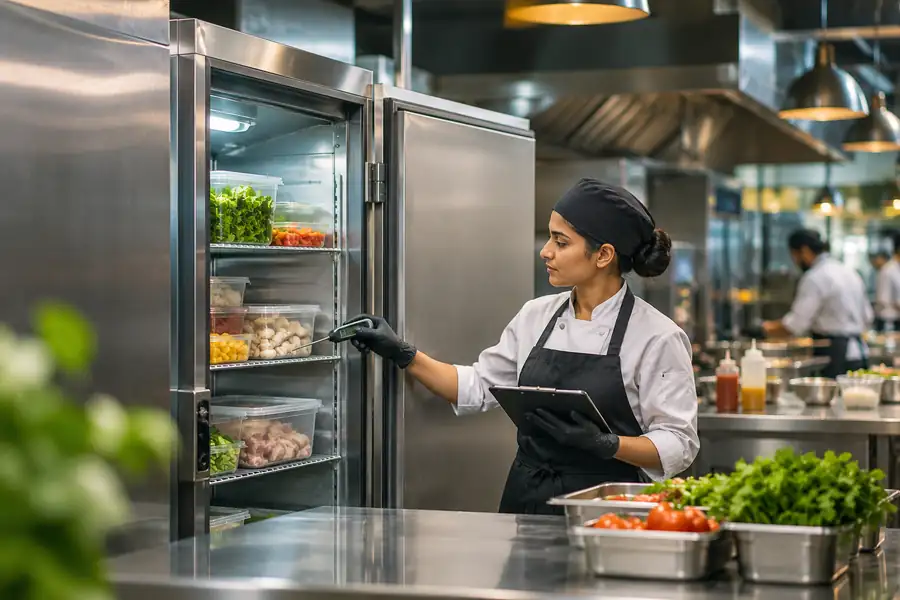
Make the call.
WHAT YOU WILL PRACTISE
Make a food-safety decision, not just a temperature entry.
Across three short units, practise recognising deviations in receiving, refrigeration, cooking, cooling, hot and cold holding, and reheating. Learn when to protect food, escalate a failed check, verify the corrective action and retain the evidence an inspector or auditor may need.
Explore CSA Academy learningCommon questions
What is the usual FSSAI cold-holding temperature?
Schedule 4 Part V sets a normal cold-holding baseline of 5°C or below. Specific controls may be stricter, including 4°C or below for refrigerated food of animal origin.
Does FSSAI require every fridge to be logged twice daily?
There is no universal twice-daily recording frequency for every catering fridge in the Part V controls reviewed. Monitoring frequency should be specified by the documented site FSMS and suited to the process.
Why does a failed reading need more than a record?
A recording alone does not show that a deviation was controlled. Protect affected food, investigate the circumstances, take corrective action, verify the outcome and retain the evidence.
Source baseline: FSSAI Schedule 4 hygiene requirements and FSSAI inspection checklists. Catering Part V and inspection-checklist values differ in some cases. This course distinguishes the underlying Part V baseline from stricter audit-readiness criteria. Last reviewed: 04 November 2026. Not a government certificate or regulatory approval.